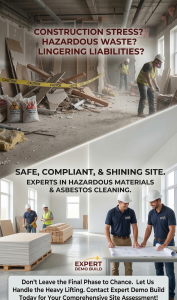
When a major construction, renovation, or demolition Construction project wraps up, the site is rarely ready for immediate occupancy or the next phase of development. Left behind is a chaotic environment of debris, dust, leftover materials, and potentially dangerous substances. This is where professional Construction Site Cleaning becomes the most critical phase of your project.
Far beyond simply sweeping up sawdust or hauling away scrap wood, true Construction Site Cleaning requires a methodical, legally compliant approach to transform a hazardous work zone into a safe, functional space. In modern construction and demolition, this process frequently intersects with specialized, high-stakes tasks, notably Hazardous Materials Cleaning and Asbestos Cleaning.
In this comprehensive guide, we will explore the depths of post-construction cleanup, why specialized intervention is non-negotiable for hazardous materials, and how the professionals at Expert Demo Build ensure your site is flawlessly prepared for its next chapter.
What is Construction Site Cleaning?
Construction Site Cleaning is a multi-phased sanitation and waste removal process tailored to commercial, industrial, and residential building sites. Unlike standard commercial janitorial services, construction cleaning deals with heavy debris, dangerous industrial dust (like silica), volatile chemicals, and structural waste.
To understand the scope of Construction Site Cleaning, it is best to break it down into its three primary phases post construction cleaning
:
1. The Rough Clean
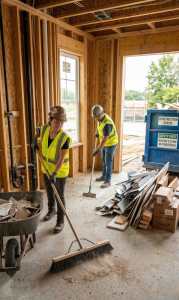
The rough clean takes place after the framing, plumbing, and electrical installations are complete. The goal is to make the site safe for the tradespeople who will finish the interior.
- Debris Removal: Hauling away large pieces of scrap metal, drywall, lumber, and packaging.
- Floor Prep: Scraping floors to remove dropped paint, caulk, or plaster.
- General Sweep: A broad sweep to eliminate trip hazards and large particulate matter.
2. The Prep Clean (or Light Clean)
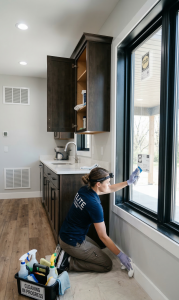
Occurring after the installation of flooring, cabinetry, and painting, the prep clean requires meticulous attention to detail.
- Cleaning inside and outside cabinets.
- Washing interior windows and frames to remove manufacturer stickers and overspray.
- Cleaning baseboards, light fixtures, and HVAC vents.
3. The Final Clean (Touch-Up Clean)
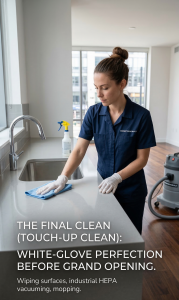
This is the white-glove phase. Shortly before the client does their final walkthrough or the building opens to the public, the final clean ensures perfection. It involves wiping down all surfaces, vacuuming carpets with industrial HEPA filters, mopping hard floors, and removing the last traces of airborne dust that have settled.
While these three steps cover the aesthetics and basic safety of a site, the reality of commercial demolition and construction is much more complex. Often, older buildings or heavy industrial sites harbor hidden dangers that turn a standard cleaning job into a highly regulated environmental remediation project servicemaster commercial services harrisburg.
The Critical Importance of Hazardous Materials Cleaning
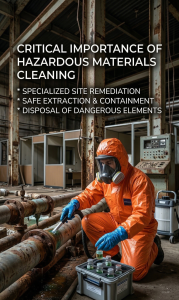
In many construction and demolition scenarios, you are not just dealing with wood, drywall, and glass. You are dealing with toxic, volatile, or chemically reactive substances. Hazardous Materials Cleaning is a specialized branch of site remediation dedicated to the safe extraction, containment, and disposal of these dangerous elements.
Whether you are renovating a mid-century office building or clearing out an old industrial manufacturing plant, Hazardous Materials Cleaning protects both the workers on-site and the surrounding environment.
Common Hazardous Materials Found on Construction Sites
- Lead-Based Paint: Used extensively before 1978, lead paint chips and dust are highly toxic, causing severe neurological damage if inhaled or ingested.
- Silica Dust: Generated by cutting brick, concrete, or stone, respirable crystalline silica is a massive hazard that can cause silicosis—a fatal lung disease.
- Chemical Spills and Solvents: Leftover paint thinners, industrial adhesives, lubricants, and chemical cleaners can contaminate soil and water supplies if not properly managed.
- Mold and Biological Hazards: Demolition often uncovers hidden water damage that has bred toxic black mold, requiring specialized biological cleaning protocols.
- PCBs (Polychlorinated Biphenyls): Found in old electrical equipment, fluorescent light ballasts, and certain caulking materials.
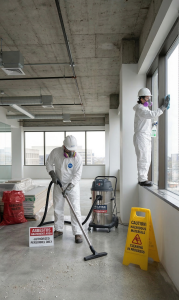
Handling these materials requires certified technicians wearing Personal Protective Equipment (PPE) such as full-face respirators, Tyvek suits, and heavy-duty gloves. Hazardous Materials Cleaning also mandates strict adherence to EPA (Environmental Protection Agency) and OSHA (Occupational Safety and Health Administration) regulations regarding the transport and disposal of toxic waste at certified facilities.
Failing to properly execute Hazardous Materials Cleaning can result in staggering fines, work stoppages, catastrophic lawsuits, and long-term health consequences for the building’s future occupants.
Deep Dive: The Intricacies of Asbestos Cleaning
Of all the hazardous materials encountered during demolition and renovation, asbestos is perhaps the most notorious and heavily regulated. Therefore, Asbestos Cleaning and abatement form a highly critical sub-sector of Construction Site Cleaning.
What is Asbestos?
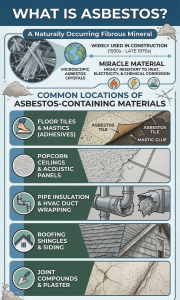
Asbestos is a naturally occurring fibrous mineral that was widely used in construction materials from the 1930s through the late 1970s. Because it is highly resistant to heat, electricity, and chemical corrosion, it was viewed as a miracle material. You can frequently find it in:
- Floor tiles and mastics (adhesives)
- Popcorn ceilings and acoustic panels
- Pipe insulation and HVAC duct wrapping
- Roofing shingles and siding
- Joint compounds and plaster
The Dangers of Asbestos
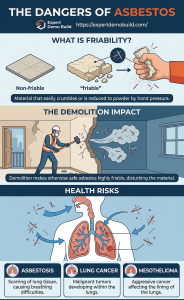
Asbestos becomes dangerous when it is “friable,” meaning the material can easily be crumbled or reduced to powder by hand pressure. Demolition naturally makes otherwise safe asbestos highly friable. When disturbed, microscopic asbestos fibers are released into the air. If inhaled, these fibers become permanently trapped in the lungs, leading to devastating illnesses such as asbestosis, lung cancer, and mesothelioma (an aggressive cancer of the lung lining).
The Asbestos Cleaning Process
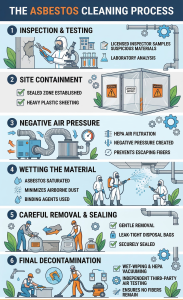
Because of its microscopic nature and severe lethality, Asbestos Cleaning is strictly governed by federal and state laws. It cannot be legally or safely performed by a standard janitorial crew or untrained construction workers. The process includes:
- Inspection and Testing: Before any demolition begins, a licensed inspector takes samples of suspicious materials to a laboratory.
- Site Containment: If asbestos is found, the area is sealed off using heavy-duty plastic sheeting.
- Negative Air Pressure: Specialized air filtration machines equipped with HEPA filters are used to create negative air pressure inside the containment zone. This ensures that when a door is opened, air flows into the zone, preventing invisible asbestos fibers from escaping into the rest of the building.
- Wetting the Material: To minimize airborne dust, the asbestos-containing materials are saturated with water and a binding agent before removal.
- Careful Removal and Sealing: The material is gently removed, placed into heavy-duty, clearly labeled leak-tight disposal bags, and sealed securely.
- Final Decontamination: The entire containment area is wet-wiped and vacuumed with HEPA vacuums. The air is then tested by an independent third-party hygienist to ensure no fibers remain before the containment is dismantled.
At Expert Demo Build, we understand that integrating rigorous Asbestos Cleaning into your broader project timeline is crucial. Attempting to cut corners here will not only endanger lives but can permanently ruin a contracting company’s reputation.
Integrating Hazard Removal into Standard Construction Site Cleaning
One of the main reasons property developers and project managers struggle with post-construction cleanup is the disjointed nature of hiring multiple subcontractors. Hiring one company to haul away debris, another for Hazardous Materials Cleaning, another for Asbestos Cleaning, and a final crew for the aesthetic touch-up creates a logistical nightmare.
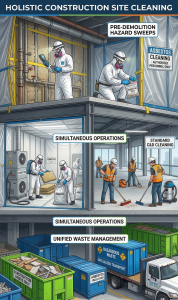
The most efficient approach to Construction Site Cleaning is a holistic one. When you engage a comprehensive firm like Expert Demo Build, the entire process is streamlined:
- Pre-Demolition Hazard Sweeps: Before the sledgehammers swing, the site is assessed for asbestos, lead, and chemicals.
- Simultaneous Operations: While the rough clean is happening in a newly framed wing of a commercial building, a sealed-off Asbestos Cleaning operation can be safely executed in an older section slated for renovation.
Unified Waste Management: Managing the dumpsters for standard C&D (Construction and Demolition) waste alongside the specialized transportation required for hazardous materials ensures nothing ends up in the wrong landfill construction and demolition waste.
The Cost of Non-Compliance in Construction Site Cleaning
Some property owners attempt to save money by utilizing their standard construction labor force to execute the final cleanup. While a carpenter or mason is an expert in their craft, they are generally not trained in the nuances of OSHA safety protocols regarding microscopic dust and hazard mitigation.
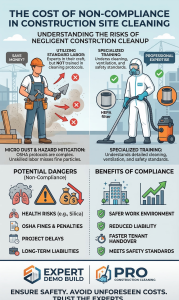
The risks of amateur Construction Site Cleaning include:
1. Legal and Financial Penalties
The EPA and local environmental quality departments conduct random site inspections. If they find improper disposal of paint thinners, lead dust, or asbestos, the project will be immediately halted. Fines for improper Hazardous Materials Cleaning can reach tens of thousands of dollars per day per violation.
2. Liability for Worker Illness
If a worker is exposed to toxic substances due to inadequate Asbestos Cleaning protocols, the property owner and the general contractor can be held liable for massive workers’ compensation claims and personal injury lawsuits.
3. HVAC System Destruction
One of the most common mistakes in amateur Construction Site Cleaning is turning on the building’s central heating and air conditioning system before the space has been adequately vacuumed with HEPA equipment. Construction dust, especially drywall dust and silica, will instantly be sucked into the ductwork and the HVAC motor. This not only ruins expensive new mechanical equipment but ensures that every time the AC turns on for the next five years, it will blow a fine layer of dust over the building’s occupants.
Best Practices for a Seamless Construction Site Cleanup
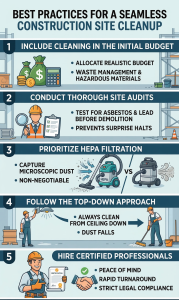
To ensure your next project concludes successfully, project managers should adhere to the following best practices for Construction Site Cleaning:
- Include Cleaning in the Initial Budget: Do not treat cleanup as an afterthought. Allocate a specific, realistic budget for waste management, standard cleaning,
Best Practices for a Seamless Construction Site Cleanup - potential Hazardous Materials Cleaning before the project even begins.
- Conduct Thorough Site Audits: Knowing what you are dealing with is half the battle. Hire inspectors to test for asbestos and lead before demolition begins. This prevents “surprise” halts in production.
- Prioritize HEPA Filtration: Whether you are dealing with hazardous materials or just standard drywall dust, the use of High-Efficiency Particulate Air (HEPA) vacuums is non-negotiable. Standard shop-vacs simply blow microscopic dust out of their exhaust ports, keeping the dust suspended in the air.
- Follow the Top-Down Approach: Always clean from the ceiling down to the floor. Dust falls. Wiping down baseboards before cleaning the overhead light fixtures simply means you will have to clean the baseboards twice.
- Hire Certified Professionals: For peace of mind, rapid turnaround times, and strict legal compliance, partner with an experienced, certified company.
Why Choose Expert Demo Build for Your Construction Site Cleaning?
At Expert Demo Build, we don’t just tear things down and build them up; we master the transition between the two. The space between demolition and a finished project is fraught with logistical challenges, regulatory red tape, and environmental hazards.
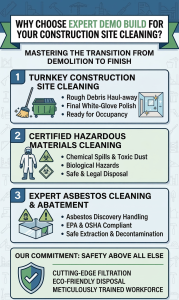
We provide end-to-end solutions that take the stress off the shoulders of general contractors and property owners. Our comprehensive services include:
- Turnkey Construction Site Cleaning: From the rough debris haul-away phase to the final white-glove polish, we leave your property immaculate and ready for occupancy.
- Certified Hazardous Materials Cleaning: We have the training, the protective gear, and the logistical network to safely contain, remove, and dispose of chemical spills, toxic dust, and biological hazards safely and legally.
Expert Asbestos Cleaning & Abatement: Don’t let an asbestos discovery derail your timeline. Our specialized teams seal the area, safely extract the friable materials, and decontaminate the space strictly according to EPA and OSHA standards, keeping your site safe and compliant.
When you partner with Expert Demo Build, you are choosing a company that values safety above all else. We utilize cutting-edge filtration technology, eco-friendly disposal methods, and a meticulously trained workforce to ensure your project crosses the finish line without a hitch.
Conclusion
The completion of a construction or demolition project should be a moment of triumph, not a period of stress regarding legal liabilities, toxic dust, or lingering waste.
Mastering Construction Site Cleaning requires an understanding that every site is unique and poses its own set of challenges. By recognizing the critical necessity of professional Hazardous Materials Cleaning and never cutting corners when it comes to Asbestos Cleaning, property owners and contractors protect their investments, their workers, and their future tenants.
Don’t leave the most vital phase of your project to chance. Ensure your site is safe, compliant, and shining. Contact Expert Demo Build today to schedule your comprehensive site assessment and let us handle the heavy lifting, the hazard removal, and the final clean.